Carnsworth
Carnsworth
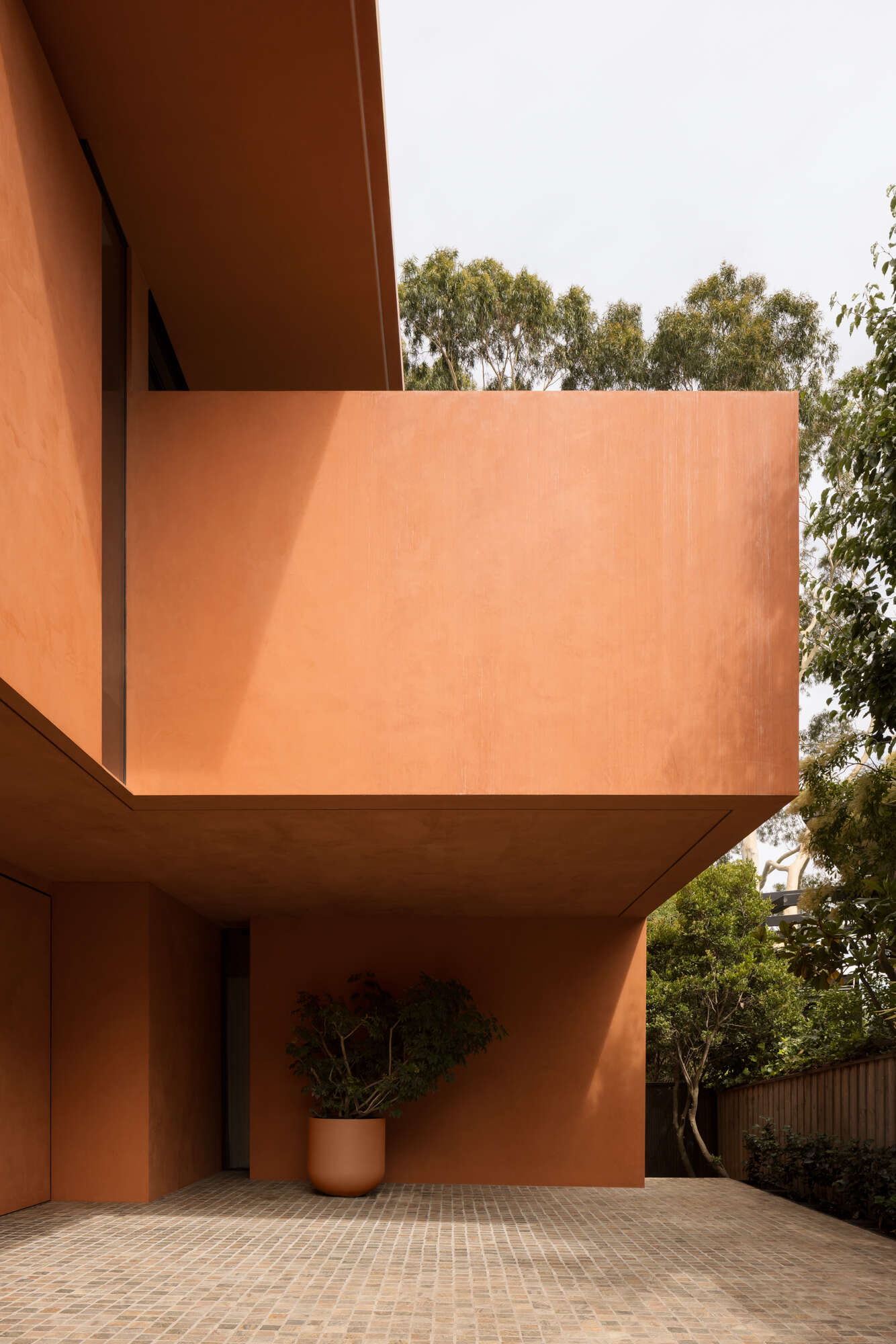
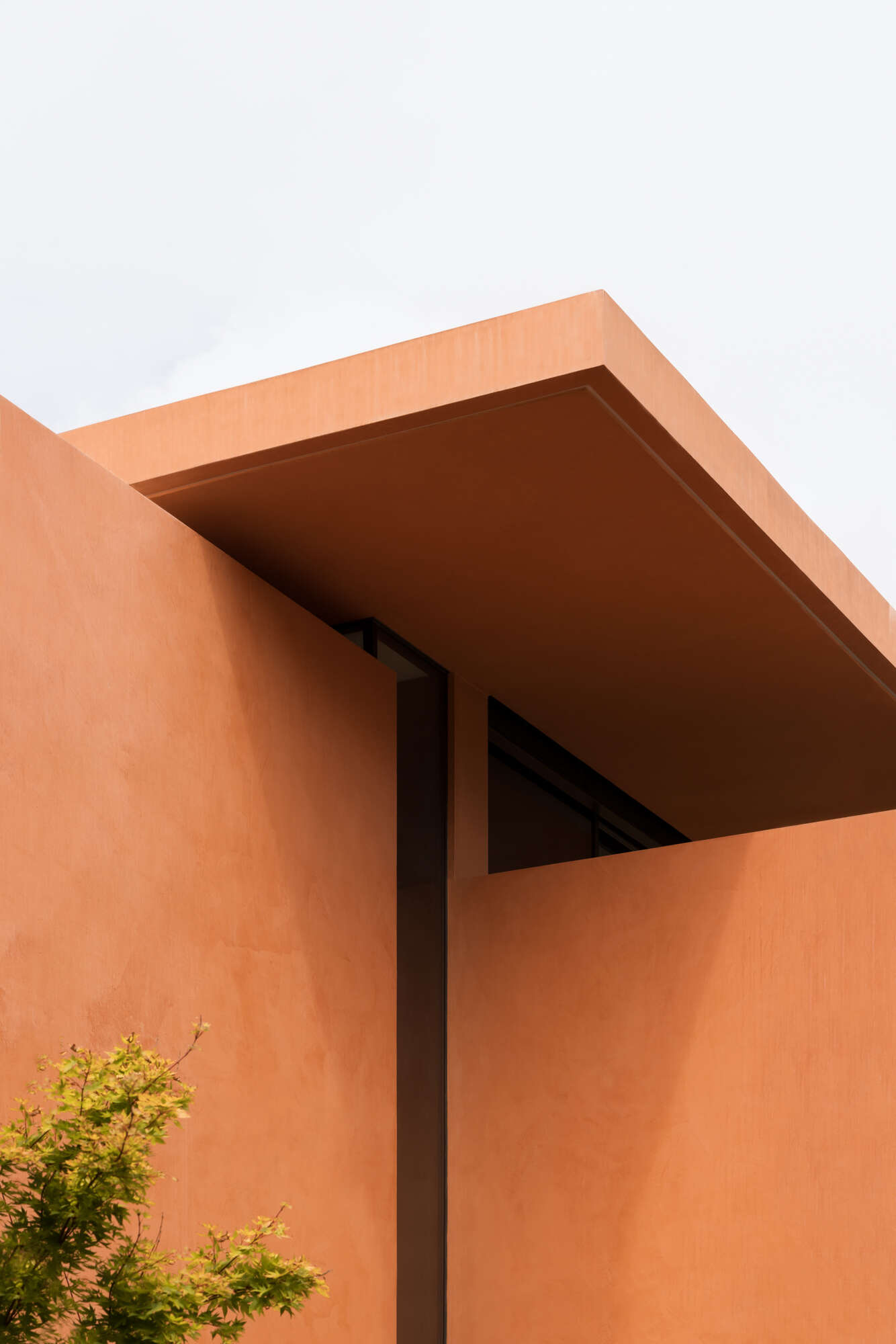
Carnsworth Residence arrives without apology. Its terracotta render, the colour of sun-baked earth and ancient desert walls, rises boldly from a treed suburban hillside, stacked in a composition of cantilevered volumes and deep shadow. Flanked by boulder outcroppings and the silver limbs of mature eucalypts, the house reads less like a building inserted into its site than one that has grown from it. By night, lit from within, it glows with a warmth that is almost ceremonial.
The approach ascends. Exterior stairs climb through layers of the composition, each level revealing new angles of the terracotta mass against the sky. The architecture rewards movement, its geometry shifting and recomposing with every step.
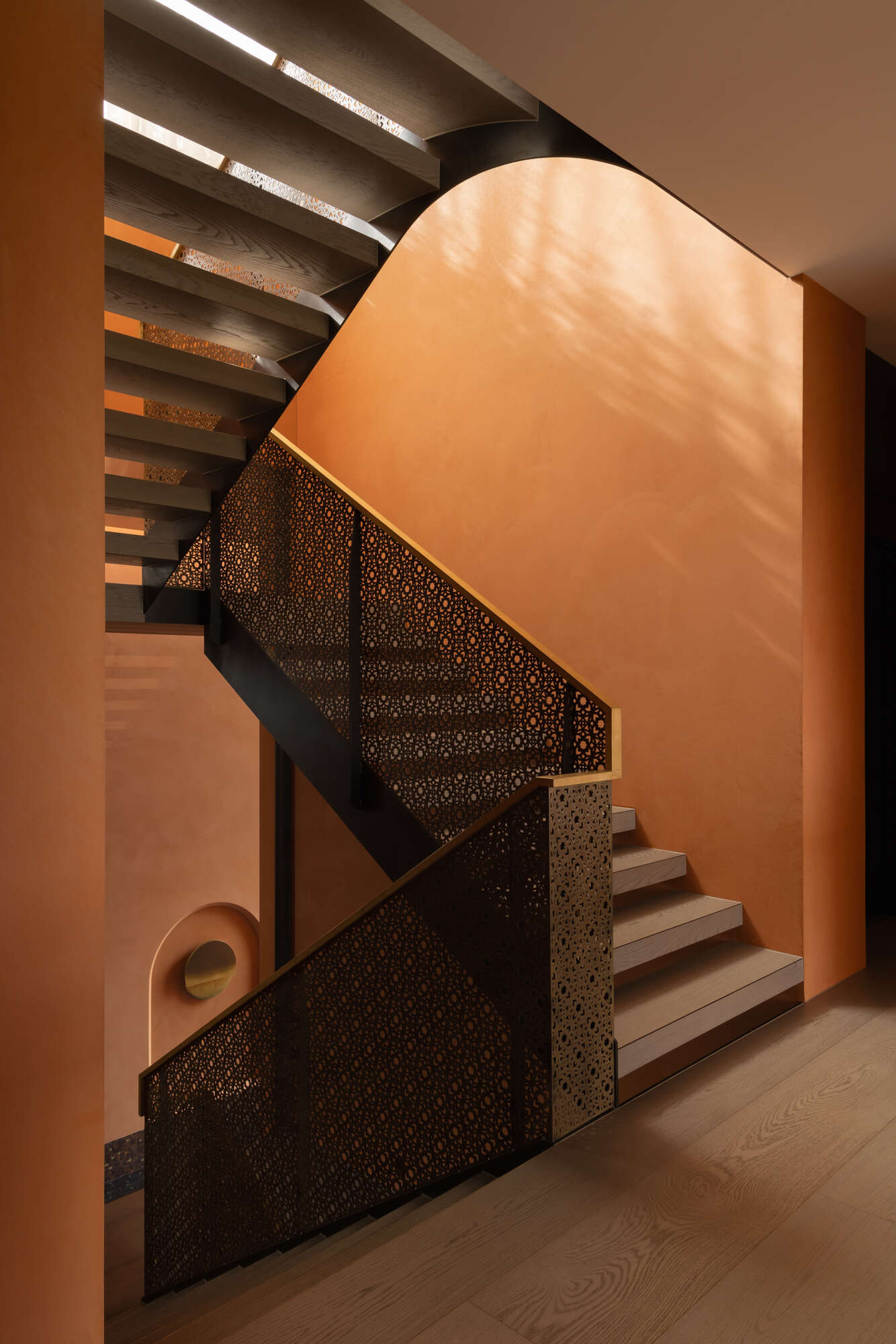
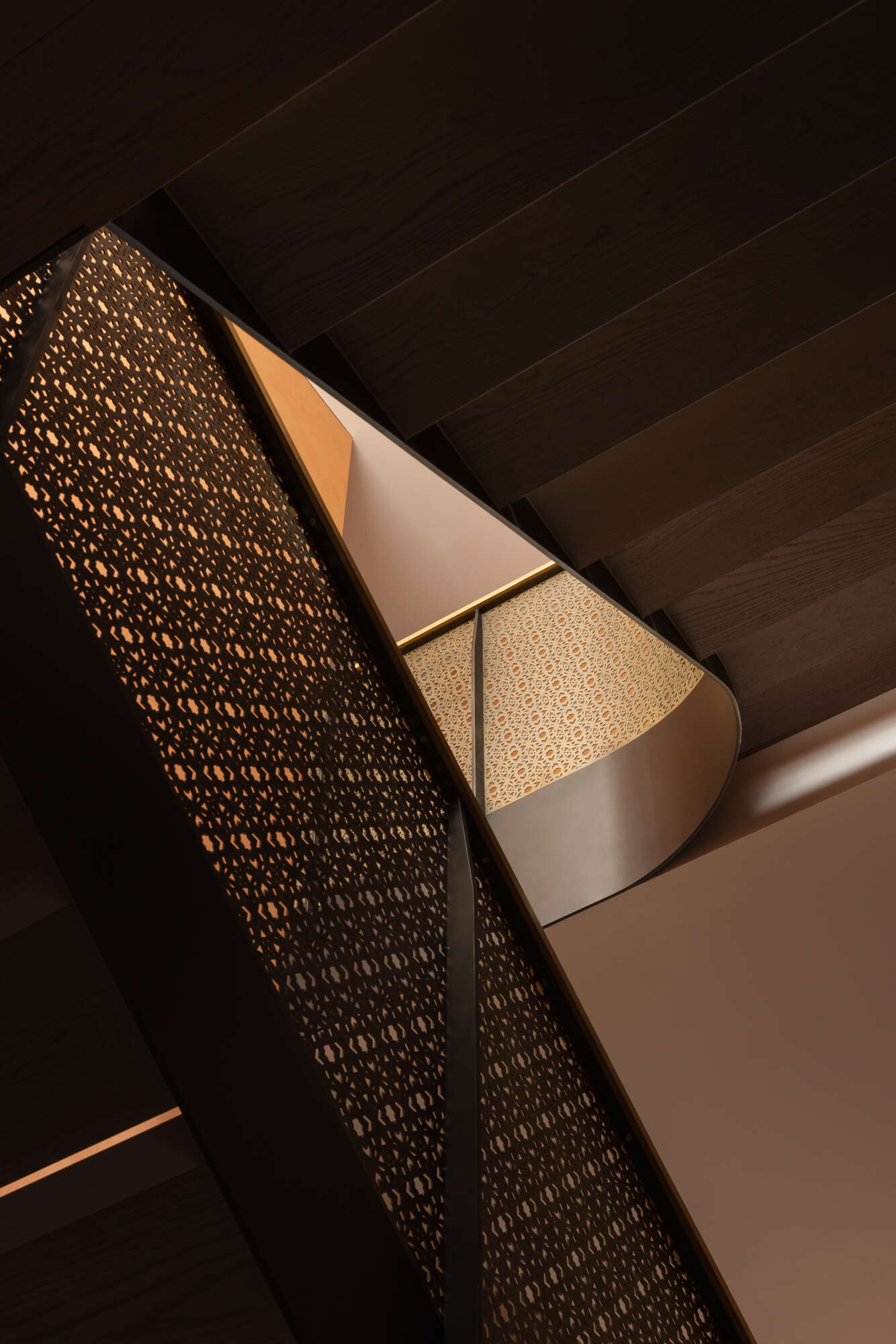
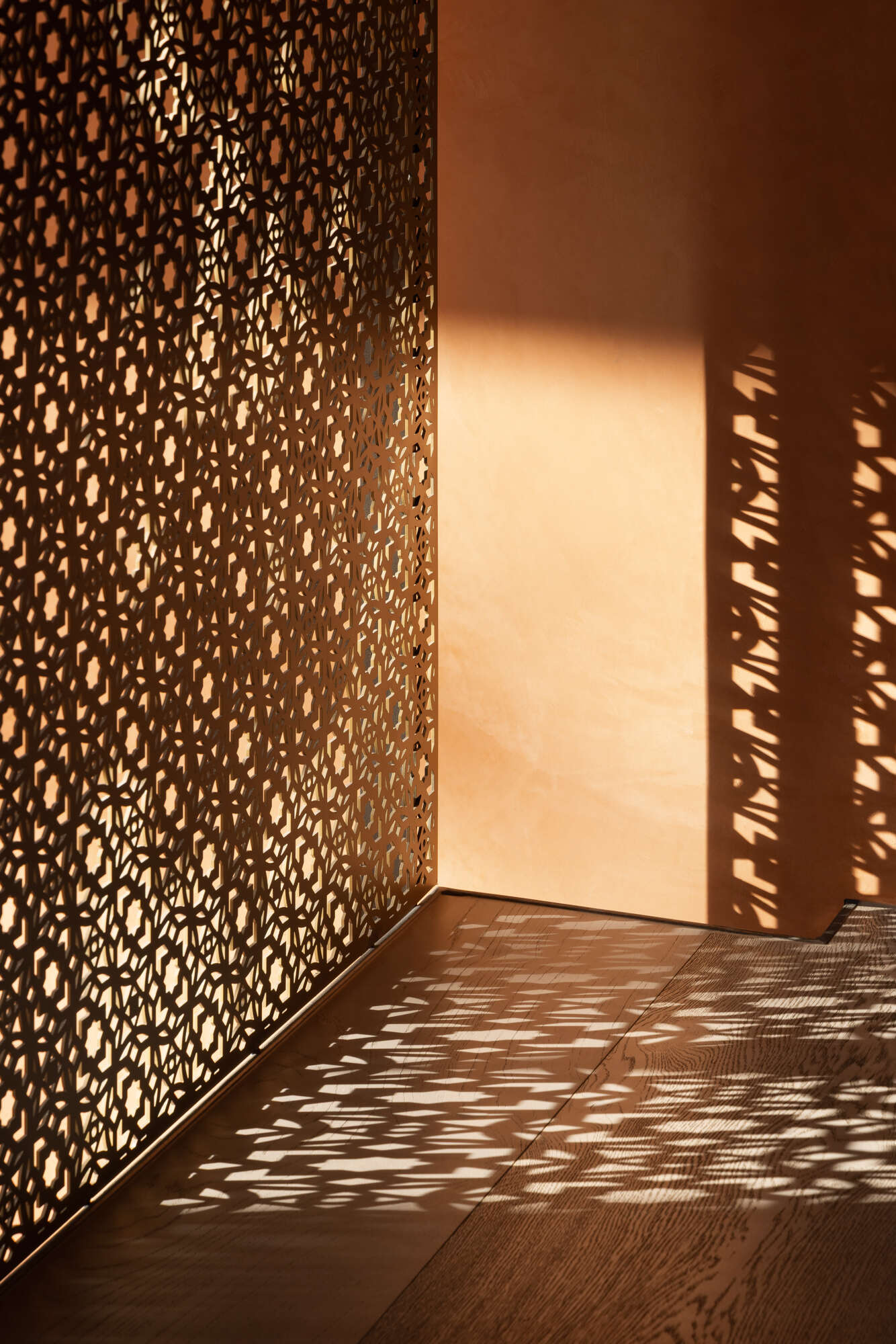
Inside, the palette shifts but the intensity does not. Walls of polished render in tones of burnt sienna and dusty rose envelop the circulation spaces, the colour absorbing light in a way that makes every corridor feel inhabited rather than merely traversed. Perforated brass screens cast intricate geometric shadows across the rendered walls, pattern and light becoming materials in their own right. A sculptural bronze chandelier descends through the stair void, its twisting metal forms catching and releasing light as though suspended mid-movement.
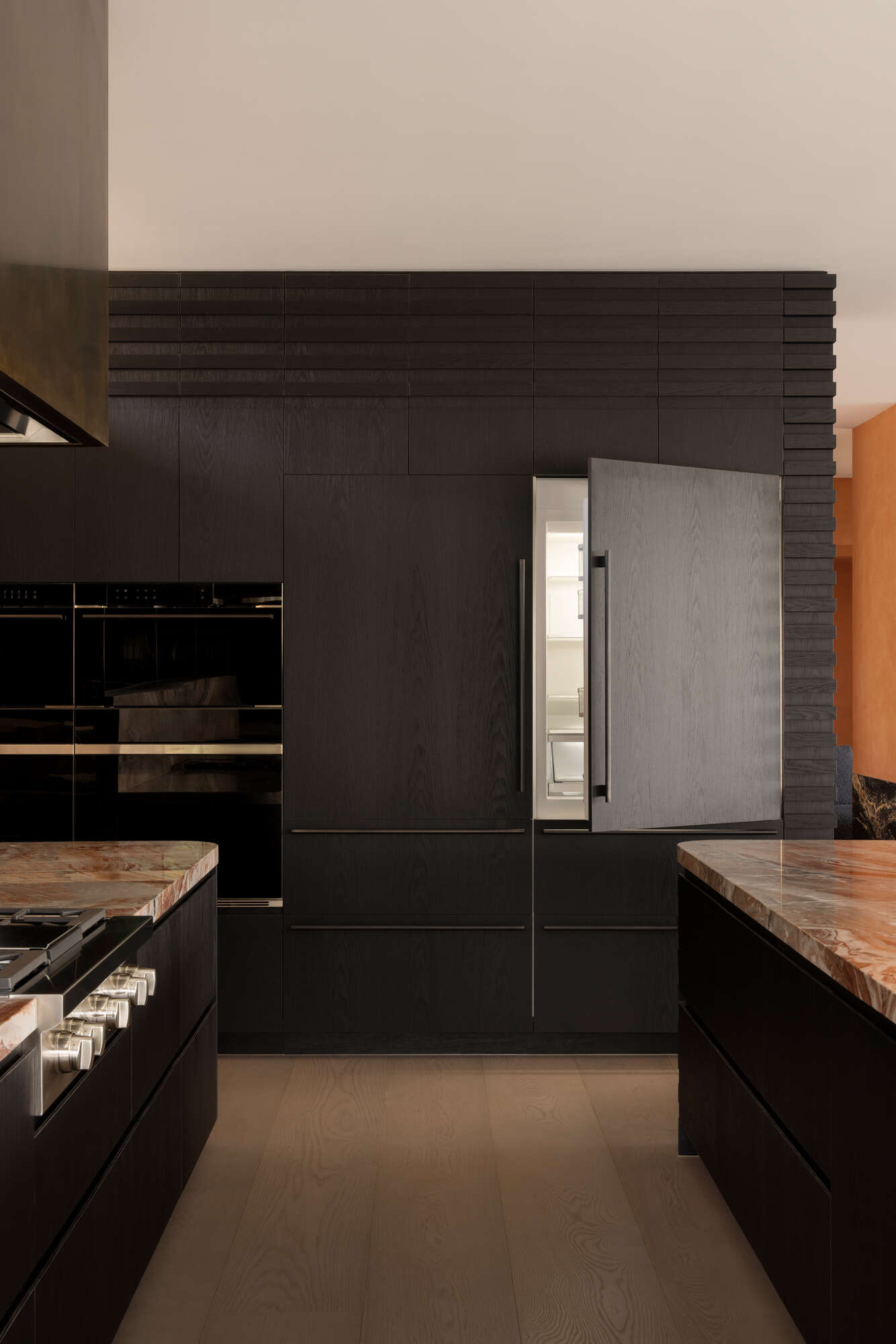
The interiors are a study in deliberate contrast. A living room anchored by an enormous slab of black and gold marble, its veining almost geological in scale, sits within a terracotta arch surround that echoes both Moorish architecture and something older still. The kitchen island is clad in a striated rose marble of exceptional drama, its surface set against dark ebonised joinery and a patinated bronze rangehood.
Each room is treated as a distinct moment within the whole, united by the warmth of the overarching colour story rather than a singular repeated material.
The indoor pool pavilion is the house’s most immersive space. Walls and ceiling rendered in deep terracotta enclose a long lap pool tiled in midnight blue mosaic, the combination evoking a private hammam of considerable atmosphere. Arched niches punctuate the pool wall at regular intervals, each housing a circular backlit mirror that glows amber against the surrounding render. A clerestory strip above admits a blade of natural light, the contrast between enclosure and sky quietly exhilarating. It is a space that belongs to another tradition entirely — part bath house, part sanctuary — and it is among the most atmospherically resolved rooms in modern Melbourne residential architecture.
The study is a room of a different register entirely. Floor-to-ceiling slabs of swirling blue-grey and gold quartzite wrap three walls, their pattern continuous and commanding, a single horizontal window framing the white limbs of a eucalypt beyond. The room is scholarly and sensual in equal measure.
From the upper terrace, the city skyline is visible through the canopy of surrounding trees. The terracotta walls enclose a lush planted garden at this level, softening the architecture’s muscularity with foliage and the scent of the garden. The house here shows its other face: generous, green, and unexpectedly calm.
Carnsworth Residence is a house of uncommon conviction. Its commitment to colour, material depth, and cultural reference produces an architecture that is singular in Melbourne’s residential landscape — a home as personal as it is powerful.
The approach ascends. Exterior stairs climb through layers of the composition, each level revealing new angles of the terracotta mass against the sky. The architecture rewards movement, its geometry shifting and recomposing with every step.
Inside, the palette shifts but the intensity does not. Walls of polished render in tones of burnt sienna and dusty rose envelop the circulation spaces, the colour absorbing light in a way that makes every corridor feel inhabited rather than merely traversed. Perforated brass screens cast intricate geometric shadows across the rendered walls, pattern and light becoming materials in their own right. A sculptural bronze chandelier descends through the stair void, its twisting metal forms catching and releasing light as though suspended mid-movement.
The interiors are a study in deliberate contrast. A living room anchored by an enormous slab of black and gold marble, its veining almost geological in scale, sits within a terracotta arch surround that echoes both Moorish architecture and something older still. The kitchen island is clad in a striated rose marble of exceptional drama, its surface set against dark ebonised joinery and a patinated bronze rangehood.
Each room is treated as a distinct moment within the whole, united by the warmth of the overarching colour story rather than a singular repeated material.
The indoor pool pavilion is the house’s most immersive space. Walls and ceiling rendered in deep terracotta enclose a long lap pool tiled in midnight blue mosaic, the combination evoking a private hammam of considerable atmosphere. Arched niches punctuate the pool wall at regular intervals, each housing a circular backlit mirror that glows amber against the surrounding render. A clerestory strip above admits a blade of natural light, the contrast between enclosure and sky quietly exhilarating. It is a space that belongs to another tradition entirely — part bath house, part sanctuary — and it is among the most atmospherically resolved rooms in modern Melbourne residential architecture.
The study is a room of a different register entirely. Floor-to-ceiling slabs of swirling blue-grey and gold quartzite wrap three walls, their pattern continuous and commanding, a single horizontal window framing the white limbs of a eucalypt beyond. The room is scholarly and sensual in equal measure.
From the upper terrace, the city skyline is visible through the canopy of surrounding trees. The terracotta walls enclose a lush planted garden at this level, softening the architecture’s muscularity with foliage and the scent of the garden. The house here shows its other face: generous, green, and unexpectedly calm.
Carnsworth Residence is a house of uncommon conviction. Its commitment to colour, material depth, and cultural reference produces an architecture that is singular in Melbourne’s residential landscape — a home as personal as it is powerful.